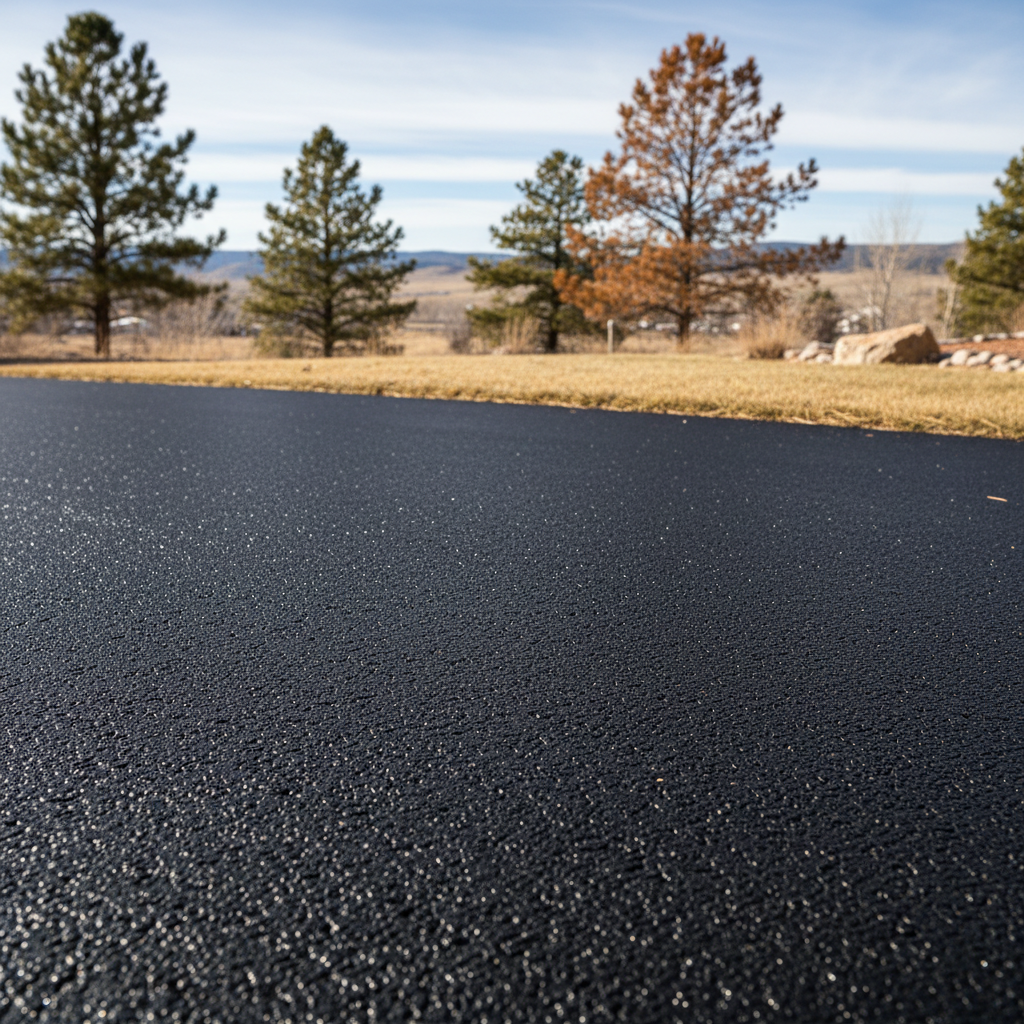
You've probably driven past a freshly paved commercial parking lot here in Westminster and thought, 'Man, that looks good. Wonder if my driveway could handle that kind of treatment?' Or maybe you're part of an HOA dealing with shared parking, or you run a small business from home with a dedicated lot. Whatever the reason, homeowners often have questions about commercial asphalt, even if they don't realize it. It's different from your standard residential driveway, and understanding those differences can save you headaches and money down the road.
What exactly is 'commercial asphalt' and how's it different from my driveway?
Good question. When we talk about commercial asphalt, we're usually talking about parking lots, access roads, or industrial surfaces that see a lot more traffic and heavier loads than your typical residential driveway. The big difference comes down to the sub-base, the asphalt mix itself, and the thickness. For a commercial job, we're building a much more robust foundation. Think about it: a residential driveway might see a couple of cars a day, maybe a delivery truck once a week. A commercial lot could have hundreds of cars, heavy trucks, semi-trailers, and constant turning movements. That requires a thicker, stronger sub-base — often 8-12 inches of compacted aggregate — and a denser asphalt mix with a higher percentage of larger aggregate, laid down in multiple lifts, totaling 3-5 inches or more. Your driveway, on the other hand, might only have 4-6 inches of sub-base and 2-3 inches of asphalt. It's all about engineering for the expected load and traffic volume.
Why would a homeowner even care about commercial asphalt?
You might think it doesn't apply to you, but it often does in a few ways. First, if you're on an HOA board, you're directly responsible for common area parking lots and access roads. Those are definitely commercial-grade projects. Second, if you've got a home-based business that involves customer parking or deliveries, your residential driveway might not cut it long-term. You could need a section of your property upgraded to commercial specs to handle the wear and tear. Third, it helps you understand the quality you're seeing around town. When you drive through areas like the Westminster Promenade or down Federal Boulevard, you're seeing commercial asphalt in action. Knowing the difference helps you appreciate what goes into a durable surface, and it gives you a benchmark for what to expect from any asphalt work, even residential.
Can I just use commercial-grade asphalt for my driveway for extra durability?
You can, but it's usually overkill and more expensive than you need. While it would certainly be durable, you'd be paying for a much thicker sub-base and more asphalt than your personal vehicles require. It's like buying a semi-truck to drive your kids to school – it'll do the job, but it's not practical or cost-effective. For most residential driveways, a properly installed residential-grade asphalt with a good sub-base and regular maintenance (like sealcoating every few years) will last you 20+ years, even with our freeze-thaw cycles here in Colorado. If you've got a specific situation, like a very steep driveway that sees heavy erosion or you're parking an RV or heavy equipment regularly, then we can talk about beefing up certain sections, but a full commercial spec isn't typically necessary for a standard home.
What kind of maintenance does commercial asphalt need? Is it different from residential?
The principles are the same, but the scale and frequency can be different. Commercial lots see more traffic, so they often need more frequent crack sealing, patching, and sealcoating. For example, a busy retail parking lot might need sealcoating every 2-3 years, whereas a residential driveway can often go 3-5 years. The types of repairs are similar – crack filling, pothole patching, and sometimes milling and overlay for larger areas. But because the loads are heavier, we often see more severe rutting or base failures in commercial settings if the initial installation wasn't robust enough. Quantum Asphalt always emphasizes proactive maintenance for commercial clients because neglecting small issues can quickly lead to expensive, large-scale repairs. It's about protecting a much larger investment.
What are the biggest challenges when installing commercial asphalt in our area?
Here in Westminster, like much of the Front Range, our biggest challenge is the expansive clay soils. That's a huge factor, especially for commercial projects. If the sub-base isn't properly prepared and compacted, those soils can expand and contract with moisture changes, leading to cracks, dips, and heaving in the asphalt above. We've seen it happen. So, for commercial work, we often have to do more extensive sub-grade preparation, sometimes even amending the soil or using geogrids to stabilize it before we even think about laying down aggregate. Drainage is another big one. With large commercial surfaces, managing stormwater runoff is critical to prevent water from undermining the base. You've got to design proper slopes and ensure catch basins are correctly placed and functioning. And then, of course, there's always the weather – those sudden summer thunderstorms can halt a paving job in its tracks, and our cold winters mean a shorter paving season.
How long does a commercial asphalt parking lot typically last?
With proper installation and regular, proactive maintenance, a commercial asphalt parking lot should last 20 to 30 years, easily. I've seen some go even longer. The key is that 'proper installation' part, which includes a well-engineered sub-base and the right asphalt mix for the expected traffic. After about 10-15 years, you'll likely start seeing more widespread cracking and maybe some rutting, which is when a mill and overlay (removing the top layer and putting down new asphalt) can extend its life significantly, often for another 10-15 years, without having to completely rebuild the entire lot. Neglect it, though, and you'll be looking at major repairs or a full replacement much sooner, sometimes in as little as 5-10 years if the base fails.
If I'm an HOA board member, what's the most important thing to know about our parking lot?
If you're on an HOA board, the single most important thing you need to know is to have a long-term maintenance plan and budget. Don't wait until you have massive potholes and widespread cracking to start thinking about it. Get a professional assessment of your asphalt every few years. Understand its condition, what preventative maintenance it needs (crack sealing, sealcoating), and when major rehabilitation (like an overlay) will likely be required. Proactive maintenance is always, always cheaper than reactive repairs or a full rebuild. Set aside funds annually for asphalt maintenance, just like you would for landscaping or roof repairs. It's a significant asset, and protecting it will save your community a lot of money and headaches down the line. And when it comes time for a project, get multiple bids, check references, and make sure the contractor understands the specific needs of commercial asphalt and our local conditions.