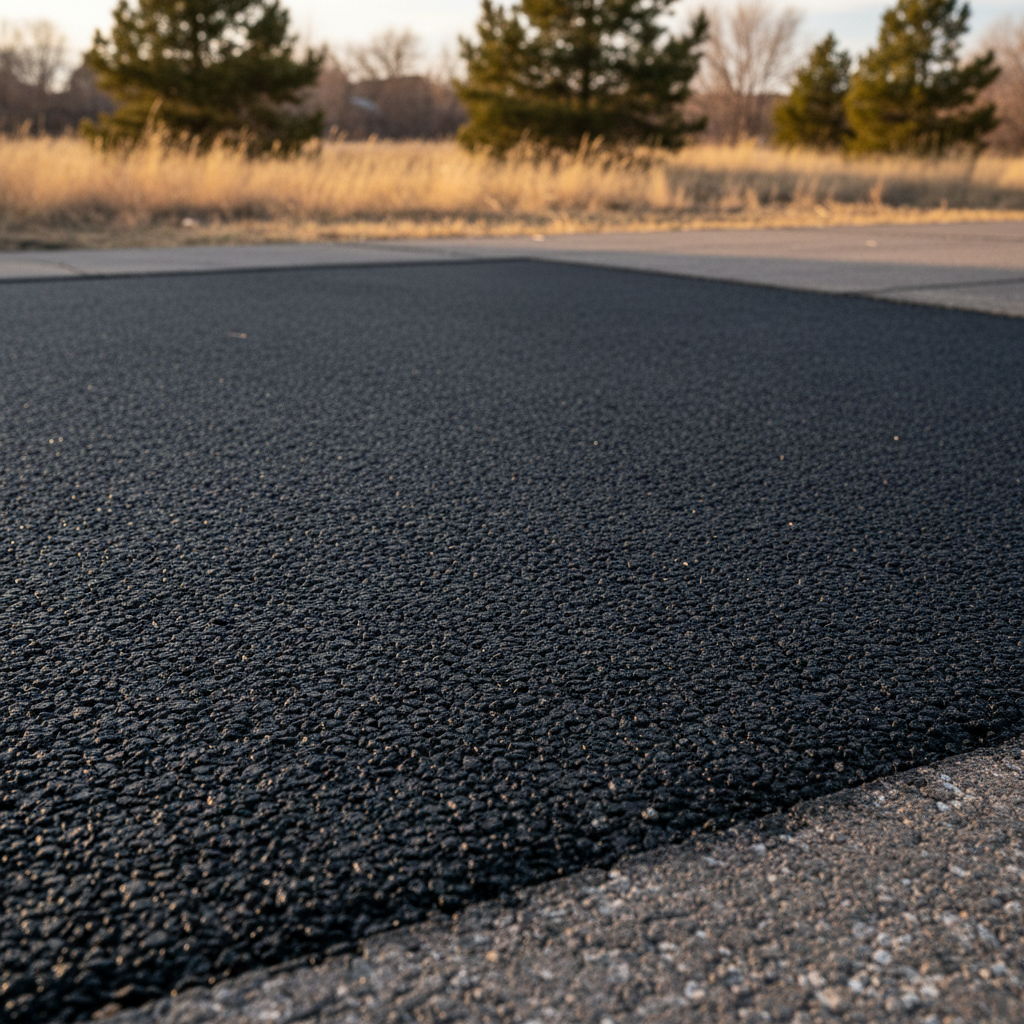
Your asphalt driveway or walkway takes a beating, especially with our Colorado weather. Freezing, thawing, heavy snow, and then that intense summer sun – it all contributes to cracks and potholes. So, when you see a problem, what do you do? Can you fix it yourself, or is it time to call someone like me?
Spotting the Problem: Know Your Damage
First things first, you gotta know what you're dealing with. Not all asphalt damage is created equal. Some stuff you can tackle, some you absolutely shouldn't even try.
- Small Cracks (under 1/2 inch wide): These are usually surface-level and often caused by normal wear and tear or minor shifts. You can probably handle these.
- Larger Cracks (over 1/2 inch wide) and Alligator Cracking: When your asphalt starts looking like an alligator's back, that's a sign of deeper structural issues. Water has gotten underneath, eroded the base, and now the surface is failing. This is usually a job for a pro.
- Potholes: A pothole means a chunk of asphalt has completely broken away, leaving a void. Small, shallow ones might be DIY-able, but anything deep or wide usually indicates a significant base problem that needs professional attention.
- Heaving or Depressions: If your asphalt is rising in one spot or sinking in another, you've got serious sub-base issues. This is definitely not a DIY fix. You're looking at excavation and rebuilding the base, which is heavy equipment work.
DIY Patching: What You Can Realistically Do
Alright, so you've got some small cracks or a minor pothole. You want to give it a shot yourself? Here's what you'll need and how to do it.
Before You Start
Get the Right Stuff: You'll need a good quality cold patch asphalt mix. Don't cheap out here; the better the mix, the better it'll hold up. You'll also want a stiff brush or broom, a shovel, a tamper (a hand tamper works for small jobs, but a plate compactor is better if you can rent one), and safety gear like gloves and eye protection.
Clean it Up: This is crucial. Sweep out all loose debris, dirt, and gravel from the crack or pothole. Use a wire brush if you need to. If there's any vegetation growing, pull it out. You want a clean, dry surface for the patch to adhere to. I've seen folks try to patch over a dirty mess, and it just doesn't last. The patch will pop right out with the first freeze-thaw cycle.
Square it Off (for potholes): If you're patching a pothole, try to make the edges as vertical as possible, even if it means cutting away some loose asphalt with a chisel and hammer. This gives the patch something solid to lock into.
During the Patching
Layer it Up: Don't just dump all the cold patch in at once. Fill the hole in layers, about 2-3 inches at a time. After each layer, compact it thoroughly with your tamper. You want it packed down tight. If you don't compact enough, it'll settle and create a new depression.
Overfill Slightly: When you get to the top layer, overfill the hole slightly, maybe by about half an inch. This accounts for future settling and helps create a slight crown for water runoff. Then, compact it down until it's level with the surrounding pavement, or just a hair higher.
After the Patching
Give it Time: Cold patch needs time to cure. Avoid driving or walking on it for at least 24-48 hours, especially if it's a deep patch. The longer you can keep traffic off it, the better it'll set.
Monitor it: Keep an eye on your patch. If it starts to sink or crumble, you might need to add more material or compact it further. Sometimes, a small DIY patch is just a temporary fix, especially if the underlying issue isn't resolved.
When to Call a Pro (That's Me!)
Look, I appreciate a good DIY spirit, but there are times when you really need professional help. If you're seeing any of these, pick up the phone:
- Large or Deep Potholes: Anything bigger than a dinner plate or deeper than a few inches usually means the base is compromised. We'll need to excavate, rebuild the base with compacted aggregate, and then apply hot asphalt mix, which is far more durable than cold patch.
- Alligator Cracking: This tells me there's significant water penetration and base failure. We're not just patching a crack; we're addressing a widespread structural problem. This often requires milling out the damaged area and repaving, or even a complete overlay.
- Heaving, Sinking, or Drainage Issues: If your driveway is uneven or water is pooling, it's a sign of serious sub-grade or drainage problems. We'll need to assess the underlying soil conditions – which, let's be honest, our Westminster clay soil can be tricky – and implement proper drainage solutions before any patching will truly hold.
- Multiple, Widespread Cracks: If your entire driveway is a spiderweb of cracks, you're past the point of individual patching. You're looking at a larger resurfacing project, like an overlay or even a full replacement.
- If You Don't Have the Time or Tools: Let's be real, not everyone has the time, the right equipment, or frankly, the desire to spend a Saturday shoveling asphalt. That's perfectly fine! That's why Quantum Asphalt is here.
Trying to DIY a big problem often ends up costing more in the long run because the patch fails quickly, and you have to do it again, or we have to fix a poorly done patch before we can do our work. For those bigger issues, give us a call. We've got the equipment, the experience, and the right materials to get it done right, the first time.