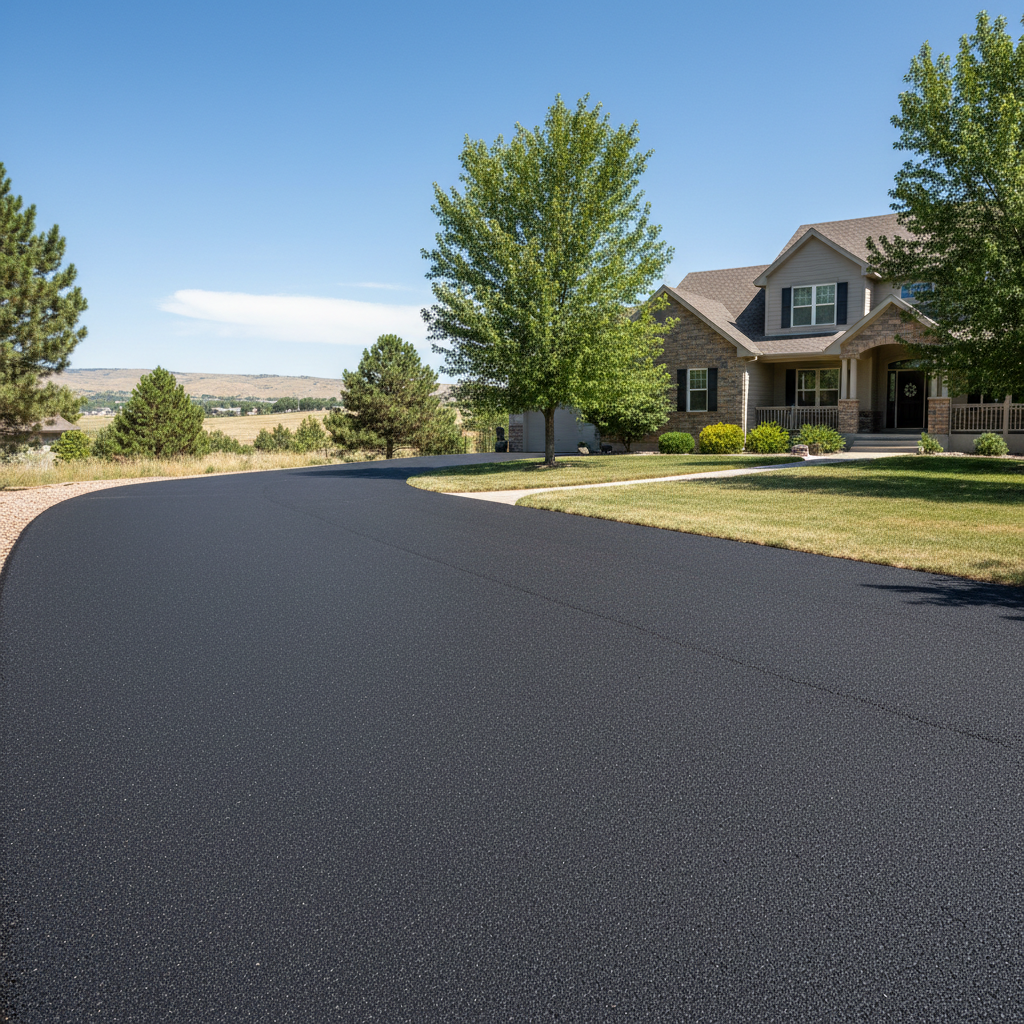
Let us talk about your asphalt. Your asphalt surface is a big investment. This is true whether it is your driveway, a parking lot for your business, or a private road. Here in Westminster, our asphalt takes a real beating. This is because of our crazy temperature swings as well as the intense sun. You cannot just pave it and then forget it. This is true if you want it to last. Quantum Asphalt has seen too many good paving jobs go south way too fast. This happens because folks do not keep up with basic maintenance.
Extending Your Asphalt's Lifespan in Colorado's Climate
Colorado's climate is not easy on asphalt. We get scorching summers as well as bone-chilling winters. Summers often hit 88°F in July. Winters have lows around 25°F in December. This is a huge temperature range. This means our asphalt is constantly expanding as well as contracting. In addition, we have over 300 sunny days every year. That intense UV radiation at our altitude bakes the oils right out of the asphalt. This makes the asphalt brittle.
So, you might ask how you can fight back against Mother Nature. You can extend the life of your pavement in Westminster. It really comes down to a few important things:
- Sealcoating is your best friend: You can think of sealcoat as sunscreen for your asphalt. It puts a protective layer over the surface. This shields it from those harsh UV rays as well as water penetration as well as oxidation. For most residential driveways in Westminster, Quantum Asphalt will tell you to plan on sealcoating every 2 to 4 years. Commercial lots might need it annually. This is especially true for lots with heavy traffic. You must make sure you wait about 6 to 12 months after a new installation before you sealcoat. This allows the asphalt to have time to cure properly.
- Address drainage issues pronto: Water is asphalt's worst enemy. If you have standing water on your pavement, it will seep in. This will weaken the base as well as lead to cracks as well as potholes. Good drainage is important. If your asphalt is not sloped correctly or you have low spots, that is a problem that needs fixing.
- Limit heavy loads: This point is pretty straightforward. Heavier vehicles put more stress on your asphalt. If you can, keep heavy trucks as well as equipment off your pavement. This is especially important when it is new or during extreme weather.
- Keep it clean: This is simple stuff. Sweeping away dirt as well as debris as well as oil spills really does help. Debris can hold moisture. Oil and chemicals can break down the asphalt binder.
What Regular Maintenance Looks Like
Regular maintenance is about being proactive. This goes beyond just sealcoating. It is like taking care of your car. You do not wait for it to break down completely before you take it to the shop.
- Crack sealing: This is important, especially with our freeze-thaw cycles in Westminster. Small cracks are normal. They are also entry points for water. When water gets into a crack and freezes, it expands. This makes that crack bigger. You need to seal those cracks as soon as they appear. It is a lot cheaper to seal a crack than to fix a pothole.
- Pothole patching: If you do get potholes, get them patched quickly. They are not just an eyesore. They are a safety hazard as well as will only get worse.
- Regular inspections: You should walk your property at least twice a year. Look for anything out of the ordinary. Catching problems early can save you a lot of money down the road.
- Striping and marking: For commercial properties in Westminster, keeping your parking lot lines clear is important. It is not just about aesthetics. It is about safety as well as compliance. Faded lines mean confusion as well as potential accidents.
Warning Signs of Problems You Should Not Ignore
Your asphalt will tell you when it is in trouble. You just need to know what to look for. Do not ignore these red flags:
- Cracks wider than a quarter-inch: These cracks are serious. They mean water is getting into your sub-base as well as causing damage.
- Alligator cracking: This looks like a series of interconnected cracks. It looks like an alligator's skin. It is a sign of structural failure underneath the pavement. This usually means you have bigger issues.
- Potholes: These are obvious. Do not put off fixing them. They are a clear indication of advanced asphalt deterioration.
- Uneven surfaces, dips, or soft spots: If you notice areas that are sinking, or feel spongy underfoot, that is a sign of a weak or saturated sub-base. This is a big deal. It needs immediate attention.
- Faded color and dullness: New asphalt is black as well as flexible. If yours is looking gray and brittle, it is oxidizing. It is also losing its essential oils. Sealcoating can often help here.
- Standing water: We already talked about this. It is worth repeating. Water pooling on your asphalt means improper grading or drainage. It is a recipe for disaster.
- Loose gravel or raveling: If you are seeing loose stones on the surface, the top layer of asphalt is breaking apart. This can happen if the asphalt was not compacted correctly. It can also happen if the mix was poor quality.
Here in Westminster, you might see these issues pop up more often. This is especially true in older neighborhoods like those around Federal Boulevard as well as 72nd Avenue. This is due to aging infrastructure as well as past construction methods.
When to Call a Professional
Some things you can handle yourself. For asphalt, there are times you absolutely need to call in the pros. Trying to DIY a major repair can end up costing you more in the long run.
You should call a professional asphalt contractor like Quantum Asphalt when:
- Cracks are widespread or growing rapidly: If you have more than just a few isolated cracks, or they are getting bigger fast, it is time for an expert assessment.
- You have major potholes or recurring issues: If potholes keep coming back in the same spots, it usually means the problem goes deeper than the surface.
- There are significant drainage problems: Fixing grading issues or installing proper drainage is not a DIY job.
- You see alligator cracking or uneven surfaces: These are signs of structural failure. They require specialized equipment as well as expertise to fix correctly.
- Your asphalt is old and worn out: If your pavement is faded, rough, and showing its age, a professional can assess it. They can tell you whether it needs resurfacing or a full replacement.
- You are planning a new installation or a major overlay: This is always a job for experienced professionals. Getting the base right is important for longevity. This is especially true with Westminster's clay soils.
Quantum Asphalt has been working on asphalt around Westminster for a while now. We know what it takes to make it last in our unique environment. Do not hesitate to reach out if you are seeing any of these signs. Getting ahead of the problem is always the smartest move for your property as well as your wallet.