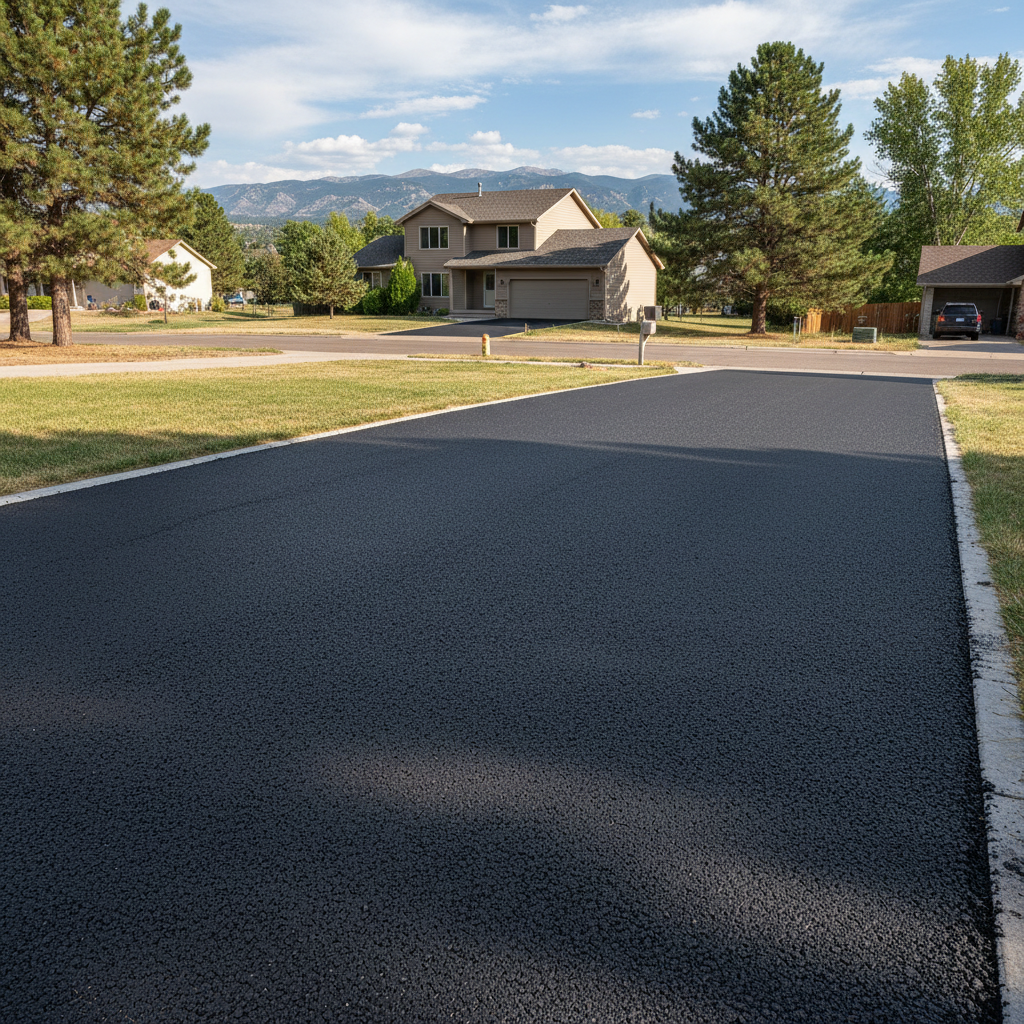
You're thinking about a new asphalt surface, right? Maybe it's a fresh driveway, or you're finally tackling that worn-out parking lot for your business here in Westminster. One of the first things on your mind is probably, "What's this going to cost me?" It's a fair question, and honestly, it's not a simple one-size-fits-all answer. But I can give you a solid idea of what to expect and what factors really move the needle on the price tag.
What Makes Asphalt Paving Prices Go Up or Down?
Look, I wish I could just tell you it's X dollars per square foot and call it a day. But there are a bunch of things that influence the final price. Think of it like building a house – a lot of variables come into play.
- Size and Scope of the Project: This is the big one, obviously. A small residential driveway is going to cost less than a sprawling commercial parking lot. Larger projects often get a slightly better per-square-foot rate because of economies of scale, but the total bill will be higher.
- Existing Conditions: Is it a brand new installation on virgin ground, or are we tearing out an old, cracked concrete slab? Demolition and removal of old material adds to the labor and disposal costs. If the sub-base (the dirt and gravel underneath the asphalt) needs significant work, like grading or adding more aggregate, that's another cost factor. Here in Westminster, especially in older neighborhoods or areas with that heavy clay soil, we often run into sub-base issues that need addressing before we even think about laying asphalt.
- Asphalt Thickness: This is crucial for durability. A standard residential driveway might get 2-3 inches of compacted asphalt, while a commercial lot with heavy truck traffic might need 4-6 inches or more. Thicker asphalt means more material and more labor to lay it, so it costs more.
- Site Accessibility: Can our equipment easily get in and out? Tight spaces, steep grades, or obstacles that require special maneuvering or smaller equipment can increase labor time and thus the cost.
- Drainage Requirements: Proper drainage isn't just a nicety; it's essential for the longevity of your pavement. If we need to install new drains, catch basins, or create specific slopes to move water away, that's an added expense.
- Material Costs: The price of asphalt itself fluctuates with oil prices. We don't control that, but it does impact our quotes.
- Permits: Depending on the size and location of your project, you might need permits from the City of Westminster. These costs are usually passed directly to you.
Typical Price Ranges You'll See in Westminster
Alright, let's get down to some numbers. Keep in mind these are ranges, and your specific project could fall outside them depending on those factors I just mentioned. These numbers are for a complete job, including sub-base prep, material, and labor.
- Residential Driveways (New Installation): For a standard 2-car driveway (around 400-600 sq ft), you're generally looking at anywhere from $3,000 to $7,000. Larger or more complex driveways, or those requiring significant sub-base work, could push it to $8,000-$12,000+. This usually breaks down to about $5.00 to $12.00 per square foot.
- Commercial Parking Lots (New Installation or Full Replacement): These are much bigger and typically require thicker asphalt and more extensive sub-base work. Prices can range from $3.00 to $7.00 per square foot. So, a 10,000 sq ft lot could be $30,000 to $70,000, and much larger projects will obviously scale up from there.
- Asphalt Overlay (Paving over existing asphalt): If your existing asphalt is still in decent shape but just needs a new wearing course, an overlay is a more cost-effective option. This usually runs about $2.00 to $4.00 per square foot. You're looking at $1,500 to $3,000 for a typical driveway, or $20,000 to $40,000 for a 10,000 sq ft commercial lot.
Remember, these are ballpark figures. Always get a detailed quote specific to your project.
What Should Be Included in Your Quote?
When you get a quote from Quantum Asphalt, or any reputable contractor, it should be clear and comprehensive. Don't settle for a scribbled number on a napkin. Here's what you should expect to see:
- Site Preparation: This includes grading, excavation, and removal of existing materials if necessary. It also covers compacting the sub-base.
- Aggregate Base: The cost of new gravel or crushed rock for the sub-base, if needed, and its installation.
- Asphalt Material: The type and quantity of asphalt mix to be used, specified in tons or square feet with a thickness.
- Installation Labor: The cost for the crew and equipment to lay and compact the asphalt.
- Drainage Solutions: Any necessary grading for positive drainage, or installation of new drainage structures.
- Traffic Control: If it's a commercial job, traffic control measures might be included.
- Cleanup: Removal of debris and ensuring the site is clean when we're done.
- Warranty Information: A clear statement of the warranty on materials and workmanship.
Make sure there are no hidden fees. If something isn't clear, ask. A good contractor will be happy to explain every line item.
How to Avoid Overpaying for Your Paving Project
Nobody wants to get ripped off. Here's how you can make sure you're getting a fair price and a quality job:
- Get Multiple Quotes: This is Paving 101. Get at least three detailed bids. It helps you compare not just the price, but also what's included and the contractor's approach.
- Check References and Reviews: Don't just take their word for it. Look at online reviews, ask for references, and maybe even drive by some of their completed projects in the area.
- Understand the Scope: Make sure each quote is for the exact same scope of work. If one quote is significantly lower, it might be because they're cutting corners or not including something vital.
- Ask About Experience: How long have they been in business? Do they specialize in the type of paving you need? Experience matters, especially with something as important as your driveway or parking lot.
- Don't Go for the Absolute Lowest Bid: While you want a good deal, the cheapest option isn't always the best. Sometimes, a slightly higher price means better materials, a more experienced crew, or a stronger warranty. It's often worth paying a little more for peace of mind and a job that lasts.
- Get Everything in Writing: This isn't just a good idea; it's essential. A detailed contract protects both you and the contractor.
Paving is a big investment, and you want it done right the first time. By understanding what goes into the cost and how to vet contractors, you'll be well-equipped to make a smart decision for your Westminster property.